Rasselas
Assigned by 1 of the 9 reading lists
Rasselas, a prince of Abyssinia, grows restless in the Happy Valley where the royal children are kept in luxury and escapes with his sister Nekayah, her maid Pekuah and the poet Imlac to make the choice of life. In Cairo and beyond they examine the lives of the rich, the pastoral, the hermit, the philosopher and the sage astronomer who believes he controls the weather, and find that none is happy. Pekuah is kidnapped and ransomed. In a conclusion in which nothing is concluded they decide to return to Abyssinia. Johnson wrote it in a week to pay for his mother's funeral.
We recommendThe History of Rasselas, Prince of AbissiniaOxford World's Classics, 2009Thomas Keymer's edition, with notes and an introduction on the tale's philosophical and Ethiopian sources.
As an Amazon Associate, The Great Books earns from qualifying purchases. Bookshop.org links also support this site. How this works.
- Written
- 1759
- Form
- Romance and tale
- Language
- English
- Length
- Short · 120 ppunder 120 pages
- Difficulty
- Moderate2 of 5 for a first-year reader
Oxford World's Classics edition
Buy this edition: Rasselas, opens in a new tabBookshop.org: Rasselas, opens in a new tab
Why it's on the list
Johnson wrote this entire tale in a single week specifically to raise money for his mother's funeral, and the genuine urgency behind its composition gives its central question unusual weight: Rasselas escapes the Happy Valley, an enclosed paradise where royal children are kept in engineered luxury precisely to prevent restlessness, because contentment manufactured through the removal of choice produces not happiness but a gnawing dissatisfaction the tale takes seriously rather than treating as mere princely ingratitude. Rasselas and his companions then conduct something like a systematic empirical survey of ways of living, examining the rich, the pastoral life, the hermit's withdrawal, the philosopher's detachment, and the astronomer who believes he controls the weather, and find every option genuinely wanting rather than discovering any one path simply needs better execution. The tale's famous conclusion, in which nothing is concluded, refuses to resolve this survey into a positive recommendation, an honest report that how to live may not have a discoverable settled answer, delivered with genuine narrative charm by a writer working against a real, pressing deadline.
Key themes
- The good life
- Rasselas and his companions conduct a systematic survey of ways of living, the rich, the pastoral, the hermit, the philosopher, the astronomer, finding every option genuinely wanting, and the tale's refusal to resolve this survey into a positive recommendation is itself its central philosophical achievement.
- Fate and freedom
- Rasselas escapes the Happy Valley precisely because contentment manufactured through the systematic removal of choice produces not happiness but gnawing dissatisfaction, treating engineered freedom from want as itself a genuine constraint on human flourishing rather than its fulfillment.
- Knowledge and truth
- The choice of life the travelers undertake functions as something like a systematic empirical survey of available ways of living, testing each candidate directly through observation rather than settling the question through abstract philosophical argument alone.
- Madness and the irrational
- The astronomer who has convinced himself he personally controls the weather represents a specific, striking case study in how intense private study, divorced from ordinary social correction, can produce genuine delusion even in an otherwise learned and rational mind.
Which edition to read
Our pick
The History of Rasselas, Prince of Abissinia
Oxford World's Classics, 2009
Thomas Keymer's edition, with notes and an introduction on the tale's philosophical and Ethiopian sources.
Amazon: the Oxford World's Classics edition, opens in a new tabBookshop.org: the Oxford World's Classics edition, opens in a new tab
Overview
About a hundred and twenty pages, Samuel Johnson’s tale of Rasselas, prince of Abyssinia, written in a single week in 1759 specifically to raise money for his mother’s funeral, a genuine urgency that gives the tale’s central philosophical question unusual weight despite its brief composition period. Rasselas grows restless in the Happy Valley, where the royal children are kept in engineered luxury, and escapes with his sister Nekayah, her maid Pekuah and the poet Imlac to make the choice of life.
In Cairo and beyond, the travelers examine the lives of the rich, the pastoral, the hermit, the philosopher and the sage astronomer who believes he controls the weather, and find that none is happy. Pekuah is kidnapped and ransomed. In a conclusion in which nothing is concluded, the travelers decide to return to Abyssinia, the tale refusing to resolve its systematic survey of ways of living into any single satisfactory recommendation.
What happens
Restlessness in the Happy Valley. Rasselas grows genuinely restless within the Happy Valley, an enclosed paradise where Abyssinia’s royal children are kept in engineered luxury specifically designed to prevent restlessness, discovering that this manufactured contentment produces not happiness but a persistent, gnawing dissatisfaction he cannot suppress.
Escape and the choice of life. Rasselas escapes the Happy Valley together with his sister Nekayah, her maid Pekuah, and the poet Imlac, setting out specifically to make what the tale calls the choice of life, a systematic investigation into how a person should actually choose to live.
Examining the rich and the pastoral life. In Cairo and the surrounding region, the travelers examine several candidate ways of living in turn, beginning with the lives of the wealthy and the simple pastoral existence, finding in each case genuine dissatisfaction beneath surface appearance of contentment.
The hermit and the philosopher. The travelers continue their survey by examining the hermit’s withdrawn solitary life and the philosopher’s reasoned, detached approach to living, finding these approaches similarly wanting despite their surface appeal to reason and spiritual discipline.
The astronomer who controls the weather. The travelers encounter a sage astronomer who has convinced himself, through intense solitary study, that he personally controls the weather, a striking episode examining how learned isolation from ordinary social correction can produce genuine delusion even in an accomplished, rational mind.
Pekuah’s kidnapping and ransom. Amid the travelers’ broader philosophical survey, Pekuah is kidnapped and subsequently ransomed, an episode of genuine danger and practical crisis that interrupts the tale’s more abstract investigation with concrete narrative incident.
The conclusion in which nothing is concluded. The tale closes with the travelers deciding simply to return to Abyssinia, having examined numerous ways of living without settling on any single satisfactory answer, a deliberately unresolved ending that refuses the positive philosophical recommendation readers might otherwise expect.
How to read it
Read the tale’s famous unresolved conclusion as its genuine philosophical achievement rather than a narrative failure to reach proper resolution; Johnson’s refusal to recommend any single way of living represents an honest report that the underlying question may not have a discoverable settled answer, delivered with real narrative charm rather than despair.
Pay close attention to how systematically the travelers’ survey proceeds, examining the rich, the pastoral, the hermit, the philosopher and the astronomer in sequence, treating this structure as something like an empirical investigation testing each candidate way of living directly rather than settling the question through abstract argument alone.
Notice how the astronomer’s specific delusion, believing he personally controls the weather, functions as more than mere comic episode; this case study examines how intense private intellectual pursuit, divorced from ordinary social correction, can produce genuine derangement even in an otherwise learned and rational mind.
Consider the genuine urgency behind the tale’s composition, written in a single week to fund Johnson’s mother’s funeral, as relevant to how you read its treatment of happiness and loss; this was not abstract philosophical speculation composed at leisure but writing produced under real, pressing personal circumstance.
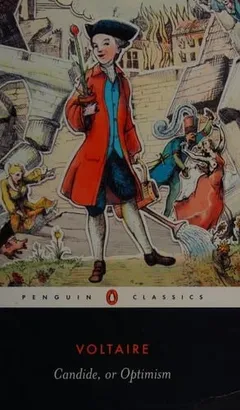
Read this tale alongside Voltaire’s Candide, composed the same year and addressing remarkably similar questions about happiness, suffering and philosophical optimism, to compare how two major eighteenth-century writers, working independently within roughly the same period, arrived at related skeptical conclusions about whether any single philosophical system can fully account for human experience.
Questions it raises
- Does the tale’s refusal to recommend any single way of living represent genuine philosophical honesty, or does this deliberately unresolved conclusion risk feeling like an evasion of the very question the narrative spends its entire length investigating?
- How does the systematic structure of the travelers’ survey, examining candidate ways of living in sequence, shape your understanding of the tale’s underlying argument compared to a more purely narrative or dramatic treatment of the same philosophical questions might have achieved?
- What does the astronomer’s specific delusion, believing he controls the weather, suggest about the relationship between learned intellectual achievement and genuine derangement? Does this episode suggest particular risks specific to solitary scholarly pursuit, or does it point toward a more general human vulnerability to self-deception?
- How should a reader weigh the genuine urgency behind the tale’s rapid, week-long composition, written specifically to fund a family funeral, against its considerable philosophical ambition? Does knowing this biographical circumstance change how you read the tale’s treatment of loss and dissatisfaction?
- Given how closely this tale’s central concerns parallel Voltaire’s Candide, composed independently the same year, what does this striking convergence suggest about broader eighteenth-century philosophical preoccupations with happiness, suffering and the limits of systematic philosophical answers to how one should live?
- What does the Happy Valley’s failure to produce genuine contentment, despite its engineered luxury and systematic removal of choice, suggest about the tale’s broader view of the relationship between freedom, choice and human happiness? Does removing all difficulty and choice from a life necessarily undermine its capacity for genuine satisfaction?
Highlights
Rasselas grows restless in the Happy Valley, an enclosed paradise where the royal children of Abyssinia are kept in engineered luxury specifically to prevent any restlessness, and finds that this manufactured contentment produces not happiness but a specific, gnawing dissatisfaction he cannot suppress or explain away.
Paraphrase of the tale's opening premise, establishing engineered contentment's failure to actually satisfy genuine human desire.
Rasselas escapes with his sister Nekayah, her maid Pekuah, and the poet Imlac, and the group undertakes a systematic examination of different ways of living, the rich, the pastoral life, the hermit's withdrawal, and the reasoning philosopher, testing each option directly through observation rather than abstract argument alone.
Paraphrase of the tale's central structural device, an empirical survey of candidate ways of living conducted through direct observation.
The travelers encounter a sage astronomer who has convinced himself, through intense solitary study, that he personally controls the weather, a striking case study in how learned isolation from ordinary social correction can produce genuine delusion even in an otherwise rational and accomplished mind.
Paraphrase of one of the tale's most memorable episodes, examining delusion arising from intellectual isolation.
The tale closes with a conclusion in which nothing is concluded, the travelers deciding simply to return to Abyssinia without having settled on any single satisfactory way of living, a deliberately unresolved ending that refuses to offer the positive recommendation readers might otherwise expect from this kind of philosophical survey.
Paraphrase of the tale's famous unresolved ending, its refusal to settle the central question the narrative has been investigating.