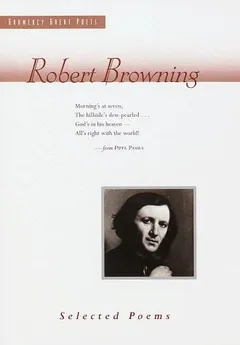
A Blot in the 'Scutcheon
Assigned by 1 of the 9 reading lists
A verse tragedy in three acts, first staged by Macready at Drury Lane in 1843. Lord Tresham, proud of his family's unstained honour, agrees to give his fourteen-year-old sister Mildred to the young Earl Mertoun, not knowing that the two are already secret lovers. A servant reveals that a man has been climbing to Mildred's window at night. Tresham confronts and kills the disguised Mertoun before learning his identity, Mildred dies of grief, and Tresham poisons himself. The play takes place in the eighteenth century and turns on the code of honour it depicts.
We recommendThe Harvard Classics, Volume 18, Modern English DramaP. F. Collier and Son, 1909The play is out of print on its own; this volume, freely available online, is where it is assigned.
As an Amazon Associate, The Great Books earns from qualifying purchases. Bookshop.org links also support this site. How this works.
- Written
- 1843
- Form
- Tragedy
- Language
- English
- Length
- Short · 60 ppunder 120 pages
- Difficulty
- Moderate2 of 5 for a first-year reader
Why it's on the list
Browning wrote this verse tragedy for the stage, and it failed on its first run at Drury Lane in 1843, undercut by a production Macready himself sabotaged after a falling-out with the author, and Browning largely gave up writing for the theater afterward, turning to the dramatic monologue form that made him famous instead. The play contains the exact machinery of tragedy he would spend his career picking apart in miniature: a code of honor so absolute that discovering it violated destroys everyone who touches the discovery, a proud brother who kills the man his sister loves without learning his identity, and a family whose obsession with an unstained name leaves nobody left alive to bear it. Reading it now is reading Browning before he found the form that suited him, working in full dramatic scale what his later monologues would compress into a single speaker's unwitting self-revelation.
Key themes
- Heroism and honour
- Lord Tresham's pride in his family's unstained honour is the play's engine and its poison at once, a code so absolute that he kills before he can learn the truth, and the play never lets the audience decide whether his honour is admirable or simply lethal.
- Love and desire
- Mildred and Mertoun's secret love, discovered by a servant's report of nighttime visits rather than by either lover's own confession, drives the whole catastrophe, and the play is frank that the secrecy itself, forced on them by the family's rigid code, is what makes disaster unavoidable.
- Guilt and redemption
- Tresham kills Mertoun before recognizing him, and the play's final act is a slow, devastating accounting of guilt discovered too late to be undone, ending with Mildred's death from grief and Tresham's own suicide by poison.
- Family and inheritance
- The Tresham family's honour is treated throughout as a possession more precious than any individual member's life, and the play's tragedy is precisely that this priority, taken to its logical end, destroys the family it was meant to protect.
Which edition to read
Our pick
The Harvard Classics, Volume 18, Modern English Drama
P. F. Collier and Son, 1909
The play is out of print on its own; this volume, freely available online, is where it is assigned.
Amazon: the P. F. Collier and Son edition, opens in a new tabBookshop.org: the P. F. Collier and Son edition, opens in a new tab
Overview
About sixty pages, a verse tragedy in three acts, written by Robert Browning and first performed at Drury Lane in London in February 1843, directed by and starring William Charles Macready, the leading actor-manager of the period, whose falling-out with Browning during rehearsals, over cuts and changes Macready insisted on making to the text, contributed to a production widely regarded as undermining the play from within. It ran only a handful of performances before closing, and the experience largely convinced Browning that his talents lay elsewhere; he wrote comparatively little more for the theater afterward, turning instead to the dramatic monologue form, single speaking voices unwittingly revealing their own character through what they say, that would define his mature reputation.
The play is set in the eighteenth century and turns entirely on a code of aristocratic honor so absolute, and so quick to assume the worst, that its violation, real or merely suspected, becomes sufficient grounds for violence before anyone involved pauses to establish the actual facts. Reading it alongside Browning’s later, more celebrated monologues, My Last Duchess especially, shows a poet already fascinated by exactly the psychological machinery, pride, jealousy, a fatal gap between appearance and truth, that his mature work would compress into a single speaker’s own unwitting self-exposure rather than staging across a full dramatic cast.
What happens
The arrangement. Lord Tresham, head of a family proud above all else of its unstained honor, has arranged the marriage of his young sister Mildred, only fourteen, to the Earl Mertoun, a match that will bring the family both social advancement and, Tresham believes, a husband worthy of Mildred’s own spotless reputation. What Tresham does not know is that Mildred and Mertoun are already secretly in love, and have been meeting privately at night, an arrangement the formal marriage negotiation, ironically, makes entirely unnecessary to continue in secret, though the play does not have either lover recognize this or come forward to simplify their situation before catastrophe overtakes them.
Discovery. A servant reports to Tresham that a man has been seen climbing to Mildred’s window at night, information Tresham receives as confirmation of exactly the family dishonor his whole identity has been organized around preventing. Rather than confronting Mildred directly to learn the truth, or waiting to discover the visitor’s identity, Tresham resolves on immediate violence, his outrage moving him to act before establishing the facts that would have changed everything about how he understood the situation.
The killing. Tresham confronts and kills the disguised nighttime visitor in a duel-like encounter, only discovering after the fatal blow has been struck that the man he has killed is Mertoun himself, his sister’s actual betrothed and secret lover, not some dishonorable stranger violating the family’s trust. The revelation transforms the killing retroactively from an act of honorable defense into a catastrophic, irreversible error, since Tresham has destroyed, with his own hand, the very marriage and the very man that would have secured his family’s honor through entirely legitimate means, had he only waited to learn what was actually happening.
The aftermath. Mildred, informed of what has happened, dies of grief and shock, her death following directly from her brother’s violence rather than from any wrongdoing of her own, since her only offense was loving Mertoun in secret under a family code that made open declaration impossible. Tresham, confronted with the full weight of what his hasty, honor-driven violence has actually cost, poisons himself, and the play closes with a family that set out to protect its unstained name left with no members remaining to bear it at all.
How to read it
Read the play as a study in how an absolute code of honor generates exactly the catastrophe it exists to prevent. Tresham’s violence is not, within the play’s own logic, a departure from honorable conduct but its direct, uncompromising application, and the tragedy depends on taking this code seriously as Tresham himself takes it, rather than dismissing his response as simply excessive or unreasonable by the play’s own internal standards.
Notice how little space the play gives to an alternative course of action. Tresham could, in principle, have confronted Mildred directly, or waited for more information, and the play’s tragic momentum depends on making this pause feel practically unavailable to a man whose entire identity is organized around defending his family’s honor against any perceived violation, however uncertain the facts.
Read this play alongside Browning’s own later dramatic monologues, particularly My Last Duchess, to see the same underlying fascination, with pride, possessiveness and a fatal gap between a speaker’s self-justifying account and the truth, reappearing in a radically compressed form. The play stages across a full cast and three acts what the mature monologues would achieve through a single speaker’s own words.
Consider why the production failed, and what that failure suggests about the play’s own dramatic construction as distinct from its psychological content. Whether the play’s difficulties on stage reflected genuine structural weaknesses, the damage done by Macready’s own cuts and interference, or simply mismatched expectations from an audience accustomed to different theatrical fare, is worth weighing as part of understanding why Browning largely abandoned the stage afterward.
Read the play’s setting, an eighteenth-century world of rigid aristocratic honor codes, as itself part of the argument, a deliberately period-specific framework that lets Browning examine an extreme, unmediated version of family pride and its consequences without needing to justify why his contemporary nineteenth-century characters might act with comparable severity.
Questions it raises
- Is Tresham’s violence a failure of the honor code he lives by, or its logical, uncompromising fulfillment? Does the play distinguish between these two readings, or does it deliberately leave them entangled?
- What would it have taken for Tresham to pause and learn the truth before acting, and does the play suggest this pause was genuinely unavailable to him, or only unavailable given who he had made himself into?
- Mildred and Mertoun’s secrecy is forced on them by a family code neither of them chose. How much responsibility, if any, does the play assign to them for the catastrophe that follows?
- Why did Browning largely abandon writing for the stage after this play’s failure, and what does the dramatic monologue form let him do that full-scale verse tragedy apparently did not?
- Is the play’s tragedy ultimately about honor, about haste, about secrecy, or about the specific, rigid social structures of the eighteenth-century world it depicts? Does the play locate the fault in a person, a code, or a system?
- How does staging this material across a full cast, rather than through a single unreliable or self-revealing speaker, change what the audience is able to know and judge, compared to Browning’s later monologue technique?
Highlights
There is a vice called Cruelty, and this Sin of thine is crueler than any name Vice ever wore.
I am he that stabbed his friend, and sister's lover, ignorant of both, in the mere darkness of a jealous fit.
Paraphrase of Tresham's own devastated account of what he has done, delivered after he learns the identity of the man he has just killed.
Do not die, Mildred! Leave me not alone on the dread world!
Paraphrase of Tresham's plea to his dying sister, delivered after he has already killed her secret lover and just before his own suicide.